Sunday, April 1, 2012

Designer prosthetic legs: Cyborg-cool status symbols

Nike sports-branded fashion prosthetic by Colin Matsco 

                                       Summit: Inspired by watching The Six Million Dollar Man as a kid


Scott Summit of Bespoke Innovations runs with the idea of creating sublimely beautiful designs in prosthesis clearly meant to be seen and admired as tech, not disguised as flesh.  When Bespoke Innovations dreams up custom leg designs with their clients using gleaming chrome, leather, suede or incorporating tat designs, they are undeniably beautiful, and so cool as to redefine the whole idea of prosthesis

Man melds with his Harley
Many leg amputations are from motorcycle accidents or sports injuries, so the client base is largely young, active and attractive.  A generation who's aesthetics are broad enough to encompass Harleys and iPhones, Japanese tat designs and Lamborghinis, are eager for a new generation of prosthetics and has Scott Summitt is gleefully pushing the boundaries of what is possible. 

No more sad-skin colored limbs hidden away under clothes and shoes.  These legs don’t claim to be anything other than pure beautifully designed cyber.  When one client rides his Harley, they meld and it’s fascinatingly hard to tell where machine stops and man begins.  Or, after a female client asked for a sexy, feminine design, one can hardly be surprised when men approach her to say how cool her leg was.  

This has been made possible with new 3D copying software developed by Autodesk, that make producing custom limbs not only possible, but lighter, with a better fit and at a dramatically lower cost than traditional fabrication. The cost is so reduced that a wardrobe of legs for different moods and occasions is possible. Scanning technology allows for an exact map of the unique contours of the existing limb so that the body is perfectly naturally balanced with the remaining natural body.  After, it’s about collaborating to find a design that will feel authentic to the person that will be taking it on as a new part of their body.  So- feminine and lacy, conservative herringbone, incorporating existing tattoos, made of chrome or leather, even appropriately sporting  a recycling symbol- each is a unique personal expression of the person wearing it. Some designs feature leather panels that can be changed out for a variety of looks.


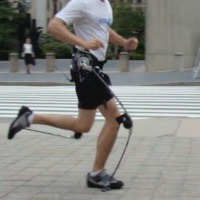
Running Exoskeleton prevents damage
 to knees and hips for able-bodied runners 

There are 1.5 million amputees in the United States alone, so the market is already not inconsiderable.  There are also bionic prostheses for able-bodied people being thrown into the mix.   Hugh Herr, a double amputee,  MIT professor and the founder of his own company, iWalk, has developed an exoskeleton that allows runners to run on hard surfaces without knee and hip damage, and a bionic exoskeleton that makes running take the same effort as walking  giving us all the ability to have superpower like abilities, is being proto-typed now for release soon.

With able-bodied people wearing external prostheses added to the total potential market, it's easy to understand the eagerness to establish presence in this area now, and how prostheses will naturally be eventually perceived as just another new sportswear segment
Testing the new exoskeleton prototype in the lab 

It's no surprise, then, that existing big players in running equipment are already getting into the market.

 Colin Matsco of New Balance designed the Nike Prosthetic, a sports-branded leg specifically designed for a young, physically active, urban male market segment.  It seems only a matter of time until wearing specific designer name limbs becomes a statement of status and lifestyle like any other sportswear or fashion choice.


Three views of sporty Nike Prosthetic
As prosthesis become more attractive and responsive, there may be eventually be movement towards voluntarily "upgrading" existing body parts as we age and they cease to work effectively.  Recently, 26 year old Patrick who waited for three years before finally opting to amputate his hand, that had been  injured and was ineffective, for the greater mobility offerred by a thought-controlled bionic hand . He says ""I think it was very cool - I did not do things with my hand for three years and then you put on the new hand and one moment later, you can move it. It's great."   Although Patrick's hand is more utilitarian than sleek in design, the technology it represents will likely soon become the new accepted standard at which point aesthetics can take precedence.


Patrick demonstrates his new mind-controlled  hand


When both the style and function ends of the equation are fully addressed, and we reach a future where no longer any social stigma attached to prosthesis, one can imagine rather different views of what is currently considered a viable medical option.

Perhaps the choice will between, say, implanting an artificial knee for a temporary fix and limited mobility in an aged limb will someday be weighed against amputation and attaching a completely new limb for a permanent and upgradable solution.

Far from the bionic super-hero one pictures, the old-age homes of the future may become the true new growth centers for bionic limb replacements, where robotic parts may be a normal option that may be considered in order to offer a resulting greater quality of life for aging men and women as their biological bodies start to break down.


Black quilted leather leg based on client's classic Channel purse
"We want the bionic limb to have a humanlike shape but we don't want the bionic leg to look human. We want it to look like a beautiful machine, to express machine beauty as opposed to human beauty — and the reason is, we want the user to pull a black sock over their bionic limb and have their limb appear to be fully biological and then the very next evening, go to a fancy party where they pull that sock off and they expose the fact that part of their body is bionic."  -Hugh Herr

Tattoos without skin: Reproducing body art he had on his leg pre-amputation


Thursday, March 29, 2012

Printing a working wrench on a 3D copier


It seems likely that, in the future, a 3D printer in your home may not be any more unusual than a traditional photo copier.  The unique opportunities created by 3D copying is inspiring everything from the fashion of the future to new musical instruments.

Tuesday, March 27, 2012

New way to pay with plastic: Canada debuts plastic $50 bills in ATMS


Carney at ATM featuring new plastic notes.
(Courtesy CP) 
Canada debuted the first plastic $50 bill.  This follows the $100 plastic note was released in November of 2011. $20, $10 and $5 notes are expected to be released throughout 2013.

The $50 note features two transparent areas—one in the shape of a maple leaf while the other that extends from top to bottom of the bank note utilising complex holographic features to enhance security, to counteract counterfeiting's rapid evolution in sophistication by use of available technology.

Existing $100 Bill
 Issuing this new series of bank notes enables us to continue to stay ahead of counterfeiters,” Governor Carney said. “And by regularly checking the leading-edge security features on these new notes, Canadians can help protect themselves from counterfeiting threats,” said Mark Carney, Governor of the Bank of Canada, who cited a dramatic drop in counterfeiting


Sunday, March 25, 2012

Aimee Mullins and her 12 pairs of legs: Prosthesis as fashion and for granting "superpowers"


Aimee Mullins' hand-carved legs from avant-garde "The Cremaster Cycle".

Athlete, actor and activist Aimee Mullins talks about her prosthetic legs -- she's got a dozen amazing pairs -- and the superpowers they grant her: speed, beauty, an extra 6 inches of height ... Quite simply, she redefines what the body can be.
A record-breaker at the Paralympic Games in 1996, Aimee Mullins has built a career as a model, actor  and advocate for women, sports and the next generation of prosthetic. 


Superpowers?


From an identity standpoint, what does it mean to have a disability? Pamela Anderson has more prosthetic in her body than I do. Nobody calls her disabled.” (Aimee Mullins) 


Aimee Mullins watches amputee and leg designer
Hugh Herr (below)  climb a wall at MIT

Herr pictured with Mullins
 on Wired magazine cover
Another amputee that breaks the previous mold is Hugh Herr, who lost his legs in a mountain climbing accident at 17.  Subsequently, motivated by trying to honor the life of the rescuer that had died trying to bring his group off the mountain, he received advanced degrees from MIT and Harvard in mechanical engineering and biophysics,  dedicated himself to designing better prosthetics, and is now a leader in the field. Herr has observed a strange divergence in the mortality and aging of his natural body, and the immortality regular upgrading of his artificial limbs:


Photo: Len Rubenstien/ Crown Business
Hugh Herr - Mountain climber, double
amputee and designer  has
"many, many legs" for different uses. 


"My biological body will degrade in time due to normal, age-related degeneration. But the artificial part of my body improves in time because I can upgrade. ... So I predict that when I'm 80 years old, I'll be able to walk with less energy than is required of a person who has biological legs, I'll be more stable, and I'll probably be able to run faster. ... The artificial part of my body is, in some sense, immortal."


MIT Professor and entrepreneur Hugh Herr talks about the future of bionic limbs and the currently available technologies, including exo-bionics (worn outside the body as an exoskeleton) for people who are using their natural legs that allow them to run on hard surfaces without damaging their knees and hips. He also  showcases exo-bionics to correct the drop-footed gait that often results from stoke, again not for amputees. His own leg will be soon be linked to his nervous system to allow him not only to walk on the beach, but to feel the sand through his bionic limbs.  His current research is focusing on creating a running exoskeleton for able-bodied people that will allow running to take the same effort as walking.


Design based on
Harley motorcycle
As prosthetics come out of the closet, designers are turning an eye towards this market as a new segment of the fashion and sportswear industry, just as eyeglasses before them.    Bespoke Innovations has used 3D printing to create cool custom legs inspired by items as diverse as from the client's existing tattoos,  Harley motorcycles,  to a classic Channel purse.


Nike's branded Prosthetic
There are 1.5 million amputees in the United States, so the market is already not inconsiderable.  If one adds in the probability that exo-bionics such as the hard surface running aid for non-amputees  will also be marketed, it's easy to understand the eagerness to establish presence in this area now. It's not surprising then, that Nike has designed the status sports-branded Nike Prosthetic, which looks like a cross between cyborg sci-fi and  high end sports equipment. In the future, it seems almost inevitable that there will be branded Air Jordan and Christian Dior body parts fighting for market share.    


Ring my Bell! Tattoo that vibrates when you get a call


Possible options: (pic: US Patent Office)
Phone maker Nokia has filed a patent for a vibrating tattoo that would alert wearers of incoming calls and texts. As it's actually the magnetic ink that is the vibrating element, it could both be worn as a badge or injected under the skin. The vibrations could be programmed to send other phone related information such as signalling a dead battery and could also have customized "vibe-tones" for different callers, much like custom ring tone today. For people who already feel that they are expected to be constantly on call and electronically available, this may make getting the option of choosing to be disconnected even more problematic.

“I have incredible optimism,” said Stephen Elop, Nokia President and CEO, “because I can see fresh opportunity for us to innovate, to differentiate..."  Certainly, this new technology should set Nokia apart as fresh and innovative.

Meanwhile, I located the following idea for a gadget taking things a step farther (from 2008). It's sobering, yet heady, how fast dreams can become actual technology.  One wonders how long it will be before something similar is developed and becomes the latest hot gadget.
Digital Tattoo Interface Turns Flesh Into An LCD
digital-tattoo-inerface-on-skin.jpg
Imagine this: your phone rings and you lift your sleeve and push a tattooed button on your forearm. Next thing you know there is a digital video of the caller, moving in full video on your arm. After you hang up the tattoo completely fades away to leave nothing but your bare skin.
The Digital Tattoo Interface is a Bluetooth device that is inserted into the skin via a small incision. After inserted as a tube, it unrolls as a flat silicon base. It rests between skin and muscle. Glucose and oxygen in your blood fuel the implant via an attached artery and vein.
A special tattoo on the surface of your skin would interact with the field created by the device. Touching it through your skin would make it react similar to a touch screen display. Implications are limitless. Telephones, TV, the Web and just about everything else we rely on could be literally embedded in your skin."

Wednesday, March 21, 2012

Airplanes of the future push the design envelope

Visual overview of airplane designs of the future


Graceful Japan Airlines design


From flapping wings to eco-friendly flying saucers, bold new futuristic airplane designs are being developed for future use. Additionally, inspired by Richard Branson's viewing early space flights as a child, Virgin Galactic is starting regular passenger space flight service in 2013 out of its New Mexico spaceport. NASA's Solar Flapper proposes propelling itself by flapping its own wings, rather than relying on traditional turbine motors; whereas CleanEra, a group of researchers and engineers at Delft University of Technology in the Netherlands, puts the emphasis on ecology with its flying saucer shaped "Greenliner" design, which is projected to reduce emissions per passenger by 50% as well as reducing noise pollution.
NASA Solar Flapper


Monday, March 19, 2012

Xray portraiture: Seeing more deeply with the art of Xavier Lucchessi


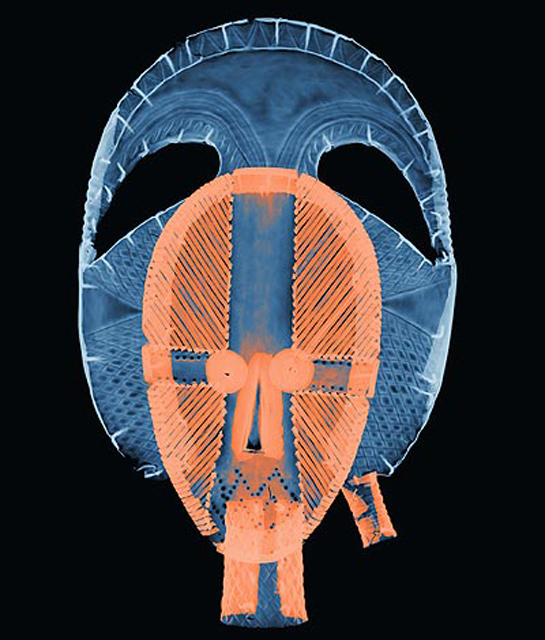
Photographer Xavier Lucchessi creates portraits using x-ray imaging. He has worked
with the museums of Paris, including the Louvre and the Musee D'Orsey photographing and interpreting museum collections ranging from African Art to plaster casts by Picasso, in addition to having a built a substantial body of work in a wide range of subject matter including automatons and bacteria, and has also published several books of his collections.
Plaster cast by Picasso interpreted by Luchessi
States Lucchessi,  "What is at stake here is that the gesture of going through matter makes it possible to see through and into matter. It is a human gesture, but it can only be made mentally if we are visionaries, or with the help of a special device. It is the gesture of the seer when he looks at you straight in the eyes and sees your soul. It is the gesture of X rays machines that look at matter and see what it conceals inside."

Bacteria become modern art through Lucchessi's fresh view
Primitive sophistication, African mask, Lucchessi


Ad from Lucchessi's latest exhibit


Color coded surgery: Molecules that make tumors and vital nerves light up with florescent colors


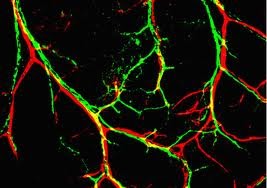
Dr. Quyen T. Nguyen is an Assistant Professor in the UCSD Department of Surgery. Nguyen demonstrates how a molecular marker can make tumors light up in neon green, showing surgeons exactly where to cut, as well as marking nerves to allow surgeons to  help doctors avoid accidentally severing nerves during surgery and minimize the risk of post-operational numbness and paralysis. 
Nguyen uses molecular probes that make tumors -- and just the tumors -- glow, as an extraordinary aid to surgeons.  Dr. Nguyen has been awarded a 5-year NIH grant to study the use of molecular fluorescence imaging to guide surgeons in tumor surgery. Using “smart” probes that can differentiate tumor from normal tissue, the goal of this grant is to develop a system that allows surgeons to see the margin between tumor and normal tissue in real time during surgery.  

Courtesy Quyen T. Nguyen M.D. Ph.D/University of California San Diego
Meanwhile, according to Discover Magazine, "...another fluorescent tool stands to help diabetics monitor their blood glucose levels without the painful finger pricks. University of Tokyo engineer Shoji Takeuchi and his team developed microscopic fluorescent beads that bind to glucose. In tests in mice, the beads glowed through the animals’ skin under ultraviolet light, varying in brightness as blood glucose levels changed. Takeuchi notes that in humans, a single injection of the beads could last more than a month, and a wearable monitoring device could periodically shine UV light on the skin to measure glucose levels. “We want to make it small enough to wear as an earring,” he says."


Saturday, March 17, 2012

Maverick NASA engineer turned street artist creates a device allowing a paralyzed friend to write with his eyes


James Powderly
Straddling the gap between artist and engineer, James Powderly has created some of the most unique and imaginative technologies used in street art in the past couple years. Some people seem to live a bit larger than the rest of us: Powderly went from working at NASA, to working with street artists, to inventing a life-changing writing device for the paralyzed, with a detention by Chinese authorities in 2009 for his free Tibet protests, in the mix.


The Eyewriter allows use of eye movements to write  
Inspired by the life of Tony Quan, a graffiti artist who was diagnosed with the degenerative nerve disorder ALS in 2003, Zach Lieberman, James Powderly, Evan Roth, Chris Sugure and Theo Watson developed “EyeWriter.” A reasonably-priced eye tracking system and the software that runs it make it possible to draw on a computer screen just by moving ones eyes. This gives people who have contracted a neuromuscular disease—some of whom are completely paralyzed—a way to express their creativity in spite of their condition. 
Eyewriter Video


Playful light design with a point: intuitively visualizing energy use


"The Light Drop is supposed to make people think about how we are
dealing with our natural resources, in this particular case, the water,
which is the main source of energy for every living organism in this
fantastic world. Water is energy indeed."

This wall-mounted lighting element illuminates the custom-molded polycarbonate bulb with an embedded, dimmable LED in the faucet, which is intuitively controlled by the tap -- the more you twist, the more light you get -- which also serve to illustrate to contextualize energy use (though at a greatly reduced rate, compared to an incandescent  version of the same design).This design by Rafael Morgan, from Brazil-based International Design Studios, won the Third Prize in the Bright LED International Design Competition, by Design Boom  and Gwangju Biennale Foundation, Korea, which was founded in 1995 in memory of spirits of civil uprising of the 1980 repression of the Gwangju Democratization Movement.  Almost 3,500 designers from 92 different countries have participated in the design competition. The Light Drop currently being sold and produced by Wever & Ducre


Friday, March 16, 2012

Customize your guitar by downloading and printing your own parts


reAcustic eGuitar, with removable sound cells
Amit Zoran of MIT Media Lab envisions an acoustic guitar with parts that could be customized and updated with open-source downloads and printed on a home 3-D printer. (3- D printers are poised for home consumer production  and should be available in the near future).

Zoran explains " ..the reAcoustic eGuitar enables guitar players to customize their own sound by assembling different sound cells instead of a single large sound box. Each string will have it’s own bridge, each bridge will be connected to a different cell. changing the cell size, material or structure will allow sound design innovations, re-designing acoustic musical instrument according to the abilities and characteristics of rapid prototype materials. open source and shared files environment can lead to a reality in which a player can download or design his own sound cells and add them (as a patch) to his instrument".
Zoran

Seth Hunter test drives a newly printed flute in this video

Multi-piped horn: Playing with
design possibilities using 3D printing
Zoran is also known for printing a working flute and recording the results as it was played as a test for acoustical quality. The resulting video is a good demonstration of the possibilities for 3D printing in the evolution of music.  He has also designed alternative concept instruments using 3D printing technology.


Thursday, March 15, 2012

Light in Future Fashion: From video dress to glowing tattoos.


Philip's Design, a Dutch-based global design firm specializing in healthcare, lighting and consumer products, creates "probes" as part of a dedicated research program into far-future lifestyle trends, that may evolve to have a significant effect on business and society. The "Bubelle" dress featured in the video,created by self-styled "body architect" Lucy McRae, was designed to be an emotion sensing garment and is the result of one of those probes.  The dress is illuminated by patterns that are changed dependent on contact with the skin, and "Fission" a body suit that reacts to being blown on by lighting tiny LEDs. ( Philip's is currently also garnering attention from the press for its fantasy future-world Robotskin £13.5 ad campaign featuring a sensual futuristic femme-bot  shaving her master) 


Katy Perry in a LED fabric dress at the  Met Museum of Art

From incorporating  LEDs into existing traditional fabric designs, or creating designs in woven luminescent LED fabric; light-up fashion is rapidly going mainstream. Designer and innovator, Hussein Chalayan, already known for his morphing dresses, is experimenting in video dresses that have moving scenes,  such as swimming fish, traveling across the the fabric.  There are also forays into clothing with lights that respond to music and other sounds, as well as self-adhesive post-mastectomy breast forms with moving patterned lights that respond to touch.

Black light tattoo now, sub-dermal LEDs soon

Black light tattoos are currently available and LEDs  are slated to be available for implantation under the skin for personal body art that will glow in normal darkened conditions shortly. Color-changing tattoos that respond to changes in blood sugar to provide an easy visual measurement for diabetics have been spectacularly successful in animal trials and are expected to be released to market in two years, pending human trials. It seems very likely that this technology will find cross-over into personal body art, which could be mixed with luminescent ink for an even wider range of expression.


Hussein Chayalan's video dresses